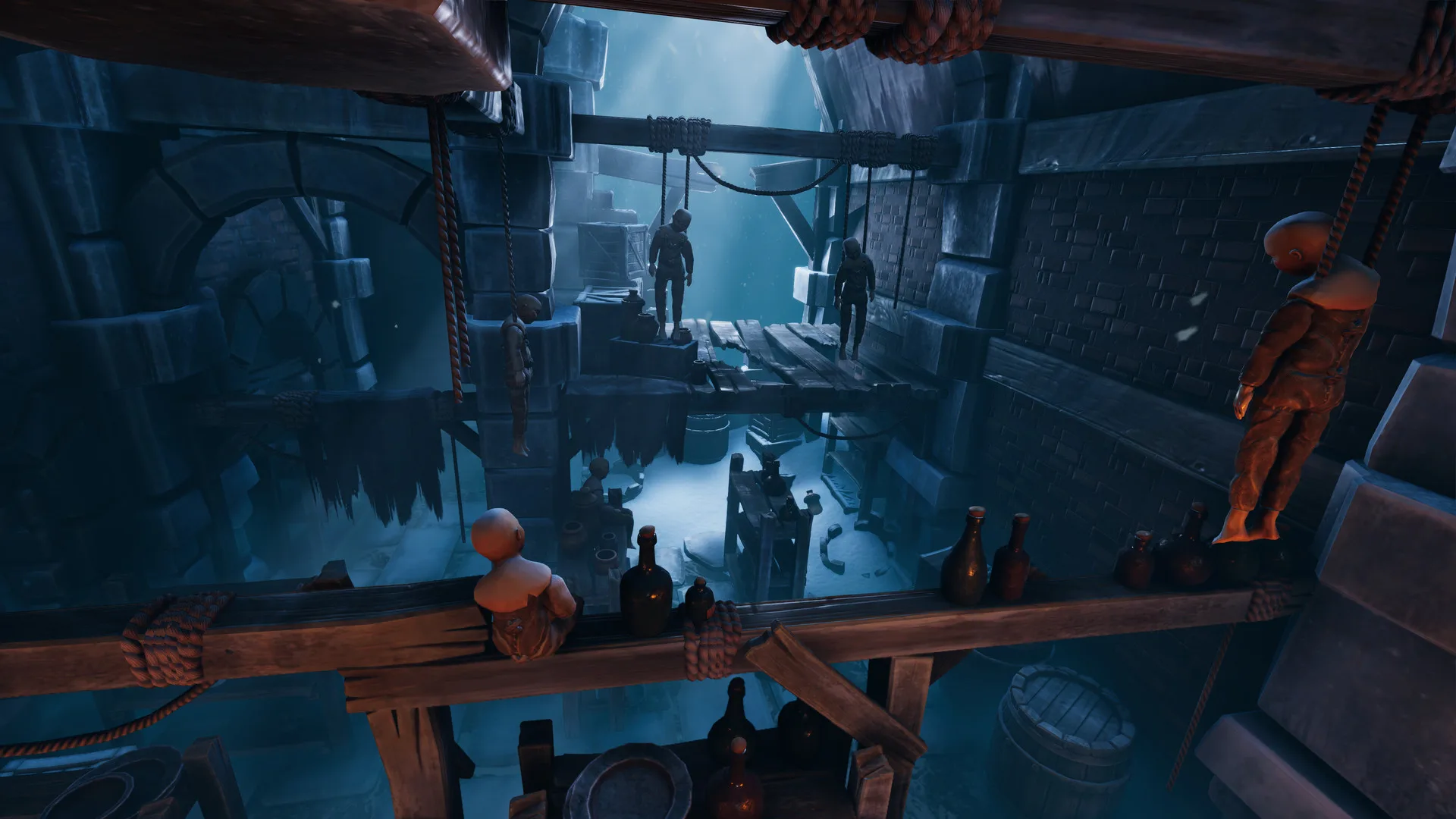
- We Were Here Forever octopus puzzle: One player describes the octopus while the other arranges the corresponding mechanism.
- Core mechanic: Asymmetric clues — the describing player cannot touch the controls, and vice versa.
- Best strategy: Name each tentacle position first, then its associated symbol, one entry at a time.
- Critical tip: Change only one control at a time and confirm the result before the next move.
- Communication rule: Fixed vocabulary ("top-left", "second from right") prevents most failed attempts.
Octopus Puzzle Overview
The We Were Here Forever octopus puzzle appears in the later underwater sections of the adventure, as the two explorers descend beneath the frozen world surrounding Castle Rock. It is a classic example of the series' asymmetric design: one player faces a large octopus-themed chamber with visual clues, while the other stands at a control mechanism that must be configured to match.
The difficulty does not come from reflexes. It comes from translating a visual scene into precise spoken instructions, and then executing them without losing track of the puzzle state. Most failed attempts happen because both players adjust things simultaneously or because symbol descriptions change halfway through.
Do not touch any controls until the describing player has read out the full configuration. Resetting a half-changed mechanism wastes time and causes miscommunication between both explorers.
| Puzzle Element | Held By | Role in the Solution |
|---|---|---|
| Octopus visual clues | Describing player | Shows positions and symbols that must be replicated |
| Control mechanism | Operating player | Must be set to match the described configuration |
| Tentacle positions | Both | Shared reference frame for all instructions |
| Confirmation feedback | Operating player's chamber | Signals whether each entry is correct |
How the Asymmetric Rooms Work
Like every major cooperative challenge in We Were Here Forever, the octopus puzzle splits information between the two explorers. Understanding exactly what each side sees prevents the most common confusion.
Describing Player
- Sees the octopus reference layout
- Cannot reach the controls
- Must convert visuals into clear spoken instructions
- Should establish names for every symbol before starting
Operating Player
- Sees the configurable mechanism
- Cannot see the reference clues
- Executes one instruction at a time
- Reports back what changed after each input
Agree on fixed names before touching anything: "crown", "eye", "hook", "spiral", and clock-face positions such as "12 o'clock tentacle". Never rename a symbol midway through the puzzle — this is the single biggest cause of failed runs.
Step-by-Step Solution Flow
The exact symbols vary per playthrough, but the solution structure stays consistent. Follow this sequence:
Survey Both Rooms
Each player describes their environment completely — every visible symbol, control, and interactive element — before any input is made. Confirm both players understand the reference frame.
Name Every Element
Assign a fixed name to each tentacle position and each associated symbol. Repeat the full list back to each other to confirm both players are using identical language.
Read the Full Configuration
The describing player reads the entire required setup aloud, entry by entry, without interruption. The operating player repeats it back before acting.
Configure One Entry at a Time
The operating player sets a single entry, then reports the result. The describing player confirms or corrects before the next entry is touched. Never change two controls at once.
Verify and Confirm
Once every entry matches, complete the final confirmation action together. If the mechanism does not respond, re-read the full configuration and compare it against what was actually set.
If the mechanism refuses to activate, return to Step 2 and re-read every entry. In most stuck cases, one entry was described with ambiguous language or was set from memory instead of being confirmed aloud.
Common Mistakes and Fixes
Most teams lose time on the octopus puzzle for the same handful of reasons. Use this table to diagnose your run:
| Mistake | Symptom | Fix |
|---|---|---|
| Changing vocabulary mid-puzzle | Operating player sets wrong symbols | Lock in names in Step 2 and never deviate |
| Adjusting multiple controls at once | Both players lose track of the state | One input, one confirmation, always |
| Vague position language | "The one on the left" confusion | Use clock-face or numbered positions |
| Skipping the read-back | Misheard instructions | Repeat every instruction before acting |
| Rushing the final sequence | Partial configuration rejected | Verify all entries before confirming |
Finish one instruction before giving the next. The walkie-talkie style of short, confirmed exchanges is faster in practice than long monologues, because nothing needs to be repeated.
Coordination Checklist
Before and during the octopus puzzle, work through this checklist as a pair:
Octopus Puzzle Checklist:
- Both players described their full room contents
- Fixed names assigned to every symbol and tentacle position
- Full configuration read aloud and repeated back
- One-at-a-time input rule agreed upon
- Final verification completed before confirming
FAQ
Q: Can the We Were Here Forever octopus puzzle be solved solo?
No. Like the rest of the campaign, the puzzle is designed for exactly two players. The clues and the controls are deliberately split between two separate chambers, so both explorers are required.
Q: Are the octopus puzzle symbols the same every playthrough?
The solution structure is consistent, but you should always re-read the clues in your current run instead of relying on memory from a previous session. Describe what you actually see.
Q: What is the fastest way to communicate the octopus layout?
Position first, appearance second. Say where each element is located (top-left, second from right, 12 o'clock) before describing what it looks like. This removes almost all ambiguity.
Q: Does the puzzle have a time limit?
The octopus puzzle is not primarily a timed challenge, so take your time with descriptions. Rushed communication causes far more delays than careful, confirmed instructions.