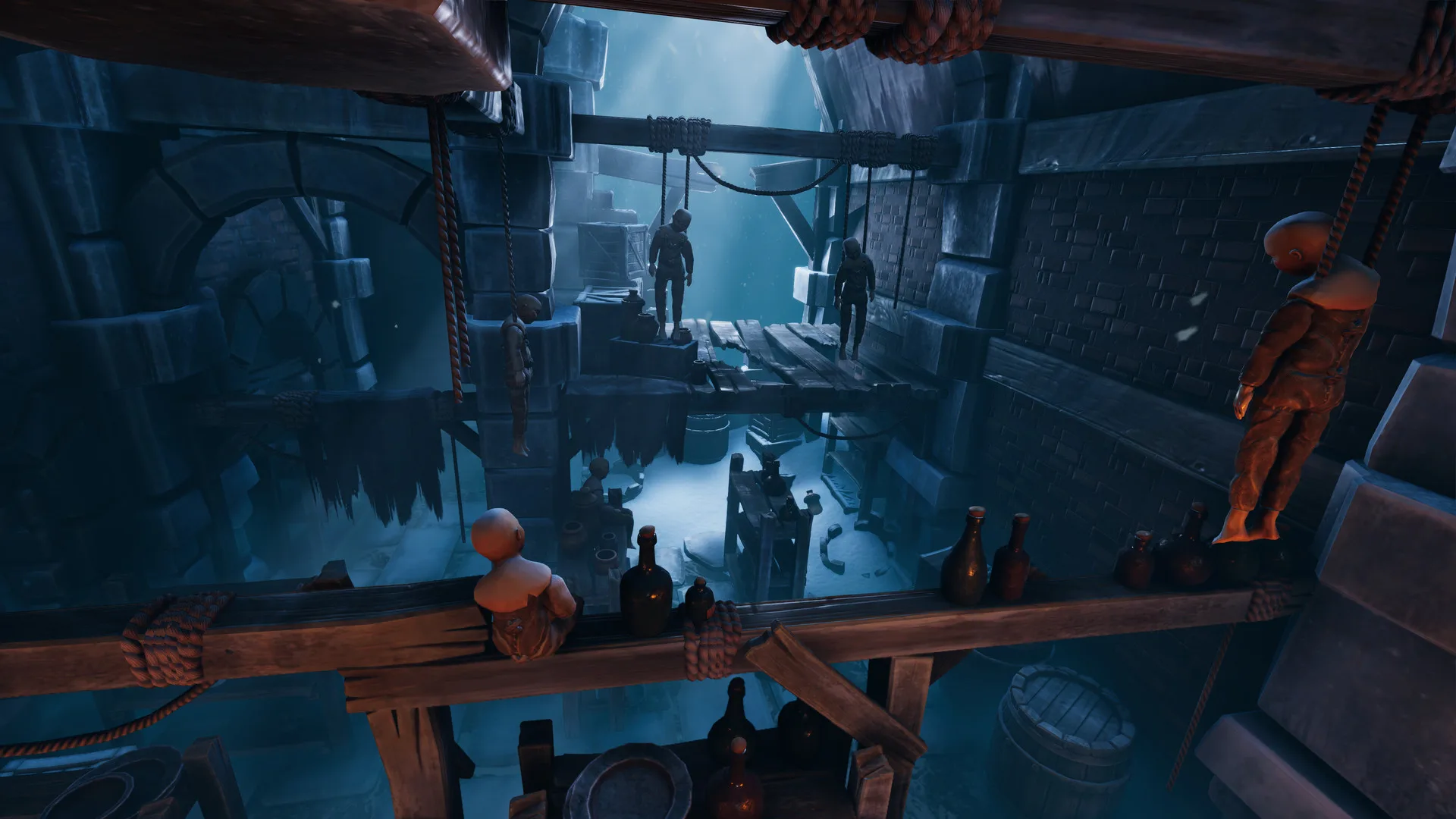
- We Were Here Forever pipe puzzle splits valves and pipe views between two separated explorers.
- Core mechanic: one player operates valves, the other reads the pipe network and directs the sequence.
- Best strategy: change one valve at a time and confirm what moved before continuing.
- Critical tip: agree on fixed names for each valve and pipe section before touching anything.
- Common trap: turning multiple valves at once destroys your ability to track puzzle state.
How the We Were Here Forever Pipe Puzzle Works
The We Were Here Forever pipe puzzle is a classic example of the series' asymmetric co-op design. Each explorer stands in a different area of Castle Rock: one player faces the physical valves and machinery that control the flow, while the other player observes the pipe network, gauges, or clues that reveal which configuration is required. Neither player can solve it alone.
Before you start turning anything, both players should describe their surroundings in full. Confirm exactly what is interactive on each side, because the pipe puzzle depends on matching information across a divided space.
Video Highlights:
- How asymmetric roles split valve control and pipe observation
- Communication habits that prevent confusion mid-puzzle
- Step-by-step approach for tracking valve states
| Role | What That Player Sees | Responsibility |
|---|---|---|
| Valve Operator | Physical valves, wheels, levers on machinery | Turns controls exactly as instructed, one at a time |
| Pipe Observer | Pipe network, gauges, flow indicators, clues | Reads the target configuration and directs each move |
Before the first turn, give each valve and pipe section a simple fixed name such as left valve, top pipe, or corner junction. Keep using those exact names for the entire puzzle. Switching descriptions halfway through is the most common cause of failed runs.
Step-by-Step Solution Approach
Every pipe-style puzzle in We Were Here Forever follows the same communication pattern. Work through it methodically instead of guessing.
Survey Both Sides
Both players describe every visible element: valves, pipes, gauges, symbols, and anything interactive. Do not touch anything yet.
Establish Shared Vocabulary
Agree on names for each valve and pipe route. Confirm the observer knows which control the operator is holding before any instructions begin.
Read the Target Configuration
The observing player studies the pipe network or clue and explains the required flow state aloud, one element at a time, while the operator repeats it back.
Turn One Valve at a Time
The operator turns a single valve. The observer immediately reports what changed in the pipe network before the next move. This single-change rule is what keeps the puzzle solvable.
Confirm the Final State
When the network matches the target, both players verify the flow indicators before moving on. Some mechanisms only trigger after a short delay.
If both players start turning valves at once, or the operator acts before instructions are confirmed, you can lose track of the current state entirely. If confused, reset by returning to the beginning and re-reading every clue together.
Communication Tips and Common Mistakes
Strong communication solves more pipe puzzles than fast reflexes. Compare effective and harmful habits below.
| Good Habit | Bad Habit | Why It Matters |
|---|---|---|
| Fixed names for valves and pipes | "The one on the left" repeated vaguely | Prevents mixed-up instructions |
| One change, one report | Multiple valves turned at once | Keeps puzzle state traceable |
| Repeat instructions back | Acting on half-heard directions | Eliminates miscommunication |
| Position before appearance | Describing only the design | Speeds up identification |
| Pause and re-survey when stuck | Random guessing | Finds the overlooked clue |
Be Specific
- State position first, then shape
- Use clock-face or compass language
- Count objects out loud
Work in Pairs
- Operator confirms each instruction
- Observer reports every change
- Count down before timed actions
Stay Calm
- Retrace the puzzle when stuck
- Missing clues are usually just overlooked
- Take turns re-checking each area
Treat every pipe puzzle like a checklist: survey, name, instruct, act, confirm. Teams that follow this loop consistently finish these sections in a fraction of the time.
If the Puzzle Still Won't Budge
When the pipe configuration appears correct but nothing happens, run through this diagnostic table before assuming the puzzle is broken.
| Symptom | Likely Cause | Fix |
|---|---|---|
| Valves turn but nothing changes | A hidden valve or secondary control was missed | Both players re-survey every interactive object in their room |
| Flow looks right, no trigger | Observer misread one pipe junction | Re-describe the target configuration from scratch |
| State resets unexpectedly | Both players acted simultaneously | Return to step one and resume the one-at-a-time rule |
| Operator cannot find a named valve | Shared vocabulary drifted | Re-agree on names and re-confirm positions |
| Audio cues missed | Walkie-talkie overlap or cutting out | Take turns speaking; one instruction at a time |
The most reliable recovery method is retracing. Return to the start of the puzzle area and compare every visible clue again. In nearly every case, one player has overlooked an object, symbol, or route detail that resets the solution path.
Pre-Puzzle Checklist and FAQ
Before Turning the First Valve:
- Both players fully described their rooms
- Every valve and pipe has a fixed name
- Target configuration read aloud and confirmed
- One-at-a-time rule agreed upon
- Observer ready to report every change
Q: Can the We Were Here Forever pipe puzzle be solved solo?
No. Like all core puzzles in the game, the pipe puzzle deliberately splits controls and clues between two explorers, and the campaign requires exactly two players with voice communication.
Q: What is the most common reason teams fail the pipe puzzle?
Turning multiple valves before reporting the result. Once the puzzle state becomes uncertain, teams lose track and must retrace the entire configuration from the beginning.
Q: How do we recover if we completely lost track of the pipe state?
Return to the start of the puzzle area, re-describe every clue and control together, and rebuild your shared vocabulary. Re-establishing the state deliberately is faster than guessing.
Q: Do the same communication tips work for other We Were Here Forever puzzles?
Yes. Fixed naming, single changes with reported results, and repeating instructions back apply to nearly every asymmetric puzzle in Castle Rock, Rockbury, and the later frozen regions.